
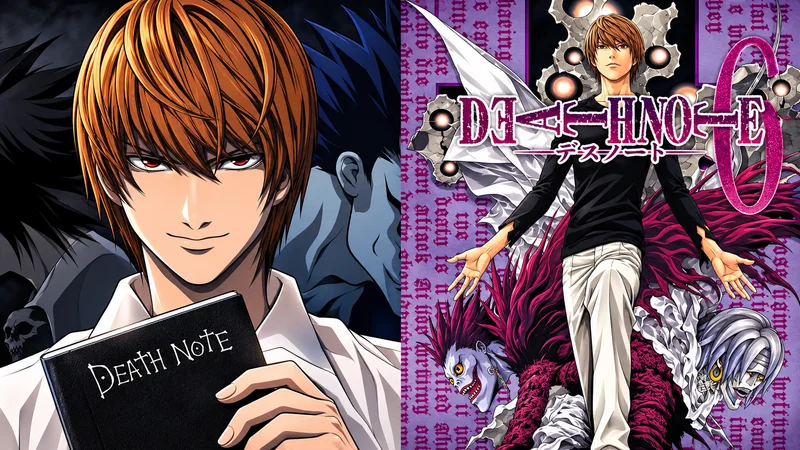
What is Death Note about? It is a supernatural psychological thriller about Light Yagami, a gifted student who finds a notebook that can kill anyone whose name he writes in it. Convinced he can eliminate crime, Light begins deciding who deserves to live. His actions draw the attention of L, a brilliant detective who sets out to stop an unseen killer known as Kira.
Created by writer Tsugumi Ohba and artist Takeshi Obata, Death Note blends a detective mystery with questions about power, punishment, and personal responsibility. Its tense confrontations offer a different kind of excitement from stories built around physical battles. Readers exploring mystery, thriller, and supernatural manga on MangaNato may find its combination of strategy and moral conflict especially appealing.
This article explains the story’s central premise, how the notebook works, why Light and L become rivals, and which characters shape the investigation. It also looks at the manga’s major themes, the difference between its printed and animated versions, and what newcomers can expect without revealing the ending.
What Is Death Note About in the Opening Story?
Light Yagami appears to have an unusually promising future. He performs well in school, understands the law, and feels frustrated by what he considers a deeply flawed world. One day, he discovers a black notebook dropped into the human world by Ryuk, a Shinigami, or death god. Its written instructions claim that a person will die if their name is entered inside.
After discovering that the notebook works, Light decides to kill criminals and reshape society according to his own idea of justice. As unexplained deaths spread, people begin calling the unknown killer Kira. Some view Kira as a protector who makes dangerous people afraid; others see an unaccountable murderer choosing victims without any right to do so.
What is Death Note about once the killings attract attention? The story becomes a pursuit between Light, who must hide his identity, and L, whose extraordinary deduction skills make him a serious threat. Their contest turns ordinary details such as a broadcast, a conversation, or an unexpected decision into clues that could expose one side to the other.
How Does the Death Note Actually Work?
The notebook’s power is supernatural, but its operation is governed by rules. That is a major reason the story feels like a mystery rather than a series of random magical events. Light cannot simply use the notebook without considering what information he has, what other people might notice, and how its limitations affect his plans.
Several rules are especially important at the beginning of the story:
- A name and face are needed: The writer must know the intended person’s name while picturing their face, so people who share a name are not automatically affected.
- A death can be specified: If no valid cause is written, the person generally dies of a heart attack; the notebook also allows certain causes and circumstances to be written under defined conditions.
- The notebook comes from a Shinigami: Its connection to the death gods creates consequences that ordinary human investigators do not initially understand.
- Knowledge becomes a weapon: Finding a person’s identity can matter as much as possessing the notebook itself.
Beyond these rules, the plot examines the choices someone makes when given a power that removes ordinary limits on violence. The restrictions also create a logical framework for the investigation: L cannot see the supernatural mechanism, but he can examine patterns in the deaths and test his suspicions.
Who Are the Main Characters in Death Note?
Death Note builds tension through characters with competing goals rather than a large cast of fighters. Even people who are trying to solve the same case may disagree about the right approach, and apparently small decisions can change who holds an advantage.
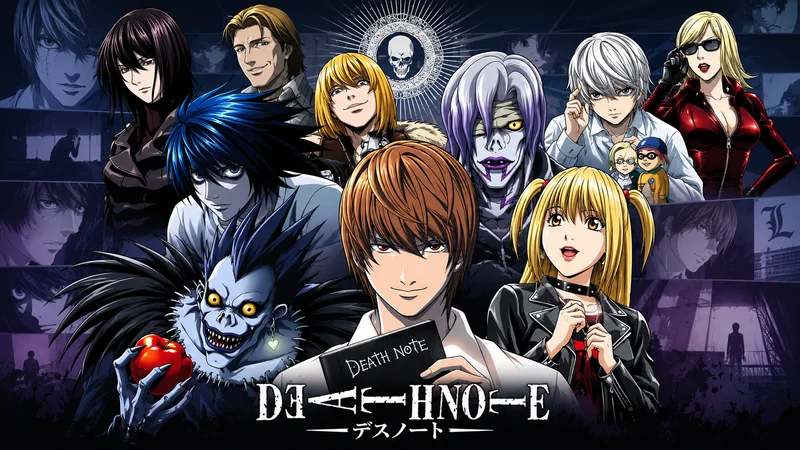
- Light Yagami: A highly intelligent student who becomes Kira and believes his killings will create a better world.
- L: An eccentric but exceptionally capable detective who investigates Kira while keeping much of his own identity secret.
- Ryuk: The Shinigami who dropped the notebook; he watches the consequences with curiosity rather than acting as a conventional moral guide.
- Misa Amane: A model whose admiration for Kira draws her into the conflict and complicates Light’s plans.
- Soichiro Yagami: Light’s father and a senior police officer whose commitment to the investigation creates a painful personal conflict.
Light sees himself as a reformer, L sees an urgent criminal investigation, and the police must weigh the danger of Kira against their duty to follow evidence. Ryuk’s detached attitude makes the humans’ decisions stand out even more sharply.
Each character also brings a different kind of risk to the mystery. Misa’s emotional commitment may interfere with Light’s calculations, while Soichiro’s loyalty to his family makes the investigation more personally costly. These tensions keep the conflict from becoming a simple competition between two isolated geniuses.
Why Is the Rivalry Between Light and L So Important?
Light and L are both observant, patient, and willing to think several moves ahead. Their strengths make them unusually well matched, but their goals are incompatible. Light needs to continue his killings without being identified; L needs to find convincing evidence against someone who can kill without approaching a victim.
Because the notebook’s existence is initially unknown to investigators, L must work backward from results that seem impossible. He studies when deaths happen, what information a killer could access, and how Kira reacts to attempts to trap him. Light, meanwhile, tries to predict the investigation and use his apparent innocence as protection.
What is Death Note about beyond deciding which genius will win? Their rivalry tests whether intelligence and certainty are the same as wisdom. Light’s ability to justify his choices becomes as important as his ability to conceal them, while L must confront a case in which normal assumptions about murder are insufficient.
The Larger Questions About Justice and Power
The notebook makes a simple fantasy possible: imagine being able to punish someone instantly, without a trial or any possibility of appeal. Death Note examines why that power might seem attractive and what happens when one person’s private judgment starts replacing laws, evidence, and public accountability.
Three ideas repeatedly give the plot its weight:
- Justice versus control: Light claims to be building a safer society, but he also decides who deserves punishment and who threatens his authority.
- Ends versus means: The story asks whether a claimed good outcome can justify killing, deception, and the sacrifice of innocent people.
- Identity and secrecy: Almost everyone involved has to judge others with incomplete information, making trust both necessary and dangerous.
What is Death Note about morally? It does not offer a simple rule that makes every choice easy. Instead, it invites readers to judge Light’s reasons alongside the human cost of his actions. The tension grows because the notebook gives him enormous power without giving him the right to decide what justice should mean for everyone.
Did Death Note Begin as a Manga or an Anime?
Death Note began as a manga written by Tsugumi Ohba and illustrated by Takeshi Obata. Its regular serialization started in Japan in December 2003. The Madhouse television anime followed in October 2006 and ran for 37 episodes, bringing the central conflict to the screen through sound, animation, and a different pace of storytelling.
When did Death Note come out, and how long afterward did the anime follow? The manga started in December 2003, while the television series premiered in October 2006, after the main serialized story had concluded. That distinction makes it clear that the manga is the original work rather than an adaptation of the television series.
What is Death Note about in either format? The essential story remains Light’s use of the notebook and the effort to expose Kira. The manga gives readers room to examine panels and deductions at their own pace; the anime uses acting, music, and editing to build tension. The two versions share a premise but are not identical scene for scene.
Is Death Note Horror, Mystery, or Psychological Thriller?
Death Note includes death gods and a notebook with lethal powers, so its supernatural premise can sound like horror. However, most of its suspense comes from what characters know, what they hide, and whether their plans will succeed. It is more accurately approached as a psychological thriller and detective mystery with supernatural elements.
There are disturbing situations and morally difficult actions, including repeated deaths and manipulation. The story is not mainly about monsters attacking people or heroes gaining new combat abilities. Its most intense moments often involve a character recognizing a clue, understanding a hidden threat, or realizing that another person may be lying.
What is Death Note about for someone choosing between genres? Readers who enjoy crime investigations, ethical dilemmas, and characters trying to outthink one another are more likely to appreciate it than readers looking primarily for fast-paced fights. Its dark subject matter also makes it worth considering personal comfort with stories about murder and abuse of power.
Frequently Asked Questions
What Is Death Note About in Simple Terms?
It is about a student who finds a notebook that can kill people and decides to use it to eliminate criminals. A brilliant detective then tries to identify and stop him, turning the premise into a psychological battle over justice and power.
Is Death Note Based on a True Story?
No. Death Note is a fictional manga created by Tsugumi Ohba and Takeshi Obata. Its Shinigami and supernatural notebook are imaginary, although its ethical questions draw on recognizable human ideas about crime, punishment, and authority.
Is Death Note Mostly About Romance?
No. Personal relationships matter, particularly when Misa becomes involved, but romance is not the central genre. The main focus is the conflict between Kira and the people investigating the deaths, along with the consequences of Light’s choices.
Does Death Note Have a Complete Ending?
Yes. The original manga’s main storyline is complete in 12 collected volumes, and the television anime tells its central narrative in 37 episodes. Related short stories and adaptations exist, but newcomers can follow the main story without them.
Conclusion
What is Death Note about at its core? It is the story of how a gifted young man uses a deadly supernatural notebook to impose his idea of justice, and how a detective’s pursuit forces him into an escalating contest of secrecy and strategy. The premise is easy to understand, but the questions it raises about power and responsibility are much harder to settle.
For a newcomer, the appeal lies in seeing characters make difficult decisions under pressure rather than watching conventional battles. Start with the original manga for its printed detail or the anime for its dramatic presentation; either format introduces the conflict that gives Death Note its distinctive identity.

ZipZapZia is a content contributor at MangaNato with a passion for manga, manhwa, and manhua. Focusing on unique stories, emerging trends, and diverse genres, ZipZapZia helps readers discover exciting titles and fresh reading experiences.